

10 tips for Deer Hunting to Never Forget
- Zach Mahdak
- Aug 16, 2023
- 8 min read

Whitetail season is quite long in most states. For my home state of Minnesota, the season begins in mid-September and runs through the end of the year. Archery-only season takes a majority of the early months, and then we roll into gun season as the rut kicks off. With that time of the season rapidly approaching, I start to make a list of things that I need to remember before stepping into the deer woods. Whether you’re a seasoned hunter or just starting out, these tips should always be in your mind, and just might make the difference between harvesting a deer, or not seeing anything.
1. Scent Control –
This can be a pretty large area to focus on. You stink! There is no way to get around that. While a deer’s sight is excellent, it doesn’t compare to their sense of smell. In my experience, sometimes deer will hear you and see you and may not get panicked or scared and they will seem to hang around the area. However, as soon as they get wind of you, they generally snort and take off. Know your wind and eliminate the chances of you getting caught as best as you can. Get the weather report early and only set up if the wind is blowing in the right direction. Placing your stand or sitting down wind of where you expect to see deer is key to not blowing your scent towards the deer. Taking milkweed or a wind detector in your hunting pack can help you to determine the wind swirls and direction changes during your hunt. Furthermore, most of us hunters are big proponents of washing our hunting clothes with odorless scent-away detergents and storing them with cover scent wafers. Try using scent-free body wash/shampoo/deodorant prior to going out hunting.

2. Know the weather --
This may be something trivial, but you would not believe how much knowing the weather can make or break your hunt. As hunters, we always want to be as comfortable as possible in the stand. That doesn’t always mean that you will see deer. Deer generally move more often when the weather isn’t ideal. Deer often remain bedded on calm, dry days; but, if the weather turns, you're more likely to see deer moving during the day. Use this to your advantage, when the barometric pressure drops prior to a rainstorm, the deer will be moving towards feeding areas. While late season hunting in the cold, you will often see hunters leaving the stand or woods during the lunch hours to either warm up themselves or to get some lunch. I recommend packing lunch and staying out longer. Obviously wearing layers and keeping warm is a priority during those long sits but the deer will often be moving during midday to also stay warm themselves.
3. Always be scouting –
It’s already that time of the year! Late summer is upon us and if you’re like me, you’re counting down the days to archery opener. With that, I have been doing some deer scouting for the upcoming season, and my scouting will continue throughout the season as much as I can. With the advent of excellent e-scouting applications, we as hunters have no excuse to not be looking at maps, terrain features, transition lines, and water sources. Knowing the area by scouting and being out in the woods can help you to learn their travel patterns and bedding areas. Looking at game trails and seeing deer droppings, scrapes and rubs allows us as hunters to see these patterns so we can set up a tree stand or ground blind in the right positions. On the other hand, if you are out every weekend tromping around your hunting area, you are likely to push deer off their patterns which will ultimately hurt your chances during the season. Finding the right balance is necessary and remember to be as stealthy as possible. Glass an area then walk through it, staying off those game trails as best as possible so you’re not dumping your scent. Using trail cameras can be a great tool to do your scouting, but I highly recommend using cellular trail cameras, just so you aren’t tempted to walk through the woods every week, pulling SD cards.

4. Choose the right gear –
This is a huge aspect of what not to forget and we could write a whole blog just on this subject alone, and we might. But choosing the right gear is necessary for success while traipsing in the woods. Gear can range from your clothing to the type of broadheads you’re using. I think the first thing you want to do is learn what game you’re trying to pursue and choose the method you want to harvest that game. For instance, choosing to be a bowhunter, chasing whitetail, can have a list of gear that you will need specifically for bowhunting. Purchase your gear in increments, you don’t have to run to the outdoor superstore and spend $2000 right off the rip. Purchase your bow or firearm at the beginning of the offseason. This gives you plenty of time to get used to your bow or firearm and getting them sighted in and comfortable with those tools. Next, I recommend making sure you have a good pair of boots and working them in by walking in them and getting them waterproofed. From there, you can start to pick up a backpack here, a grunt call there, a new release, tweaking your arrow setups. Over this offseason for myself, I have spent money every other paycheck it seems to get new or updated gear. As far as clothes are concerned, you can likely get away with a couple of pairs of pants, shirts, sweaters, jackets, etc. However, I recommend picking a camo pattern that you like and getting an entire outfit in that pattern before moving to a second or third outfit. The idea is to pick a camo pattern that will cause the most breakup in the area in which you hunt. Likely you won’t want to buy a brush time camo pattern if you’re hunting in close hardwoods. Choosing the right gear will take some trial and error so be patient and understand that you can and will spend money, but you don’t always have to have the most expensive items to be successful. If you are a bowhunter, for Pete’s sake, do not forget your release! Pro tip: have two, one attached to your bow, the other in your hunting pack.
5. Open your senses –
Be alert when you step out into the woods. For me, this starts with about 2 cups of coffee, getting up early and being in my stand or blind location about an hour prior to first light, not daylight. Turn off that flashlight as soon as you get settled and let your sight and hearing do all the work. Oftentimes, you’ll hear crunching in the woods as soon as you’re still. That crunching could be a squirrel or your trophy buck. Paying attention to your surroundings by being alert will help you to learn the different sounds of animals, seeing animal patterns, and potentially even smelling what you’re hunting. Allow yourself time to get set up and settled in prior to deer moving patterns. Listen closely for crunching noises and breaking twigs. Watch for even the slightest movement. Also look for deer parts; sometimes you won’t see the whole deer. Look for a head, a horn, an ear, a leg, or a patch of brown or white.
6. Don’t be afraid to use calls –
Calls and rattling antlers can be a great asset to flush out deer or stop a buck that’s chasing a doe. You’re likely to be more successful using calls and antlers pre-, during, or immediately post-rut. However, grunt calls can be used to entice a buck to come out of the tree line. And rattling can bring in a buck that might be bigger than your rattling antlers sounds to a deer. If you’re hunting on the ground, utilize leaves in the early season and pre-rut to sound like a deer making a scrape. Utilize a snort wheeze in your sequence of rattling and grunting. Try not to overuse it, it’s ok to wait 25-30 minutes in between sequences. Too much noise could spook deer feeding nearby or at least tip it off that something isn’t right. Also, if you’re by yourself, try to refrain from rattling if you can see deer, and you’re not hunting with a decoy. Oftentimes bucks are looking for those fighting bucks and they will be a little more cautious coming into your shooting lanes.

7. The Rut can change everything –
Anyone who has hunted early season, and during the rut will likely tell you that deer will be way less predictable. The rut is the deer mating season, which means does are in estrous, and it's time to breed. Bucks are likely chasing does and fighting other bucks for mating rights. These two things alone can change deer feeding patterns, bedding areas and partners, as well as changing the time of day that the deer you’ve been hunting are up and moving around. During pre-rut, bucks are marking their territory by making new or checking pre-existing scrapes and leaving their scent all over their area. This will seemingly disappear during peak rut. Pre-rut, mature bucks will then start to use natural funnels to and from bedding areas and feeding areas. However, during peak rut, bucks will be chasing does all around and often right through open fields. This is the time of the year you often must rely on using calls to be most efficient. Don’t be afraid to hunt during the rut, but also don’t be expecting the same activities like you normally see during early season hunting.
8. Safety is non-negotiable –
Safety should always be your number one consideration regardless of the method of harvest that you choose. These are some key points that you should have in your mind regarding safety:
Most states require you to complete a Hunter Education Safety Course, prior to issuing a hunting license. These courses are designed with the utmost safety in mind. These courses go over the rules of firearm safety and what to expect when you’re out in the woods. Don’t forget the golden rules of firearm safety – treat every weapon as if it were loaded, never point your firearm at anything that you do not intend to shoot, keep your finger off the trigger and the safety on until you are ready to shoot, and know your target and what lies beyond.
If you’re hunting in a tree stand or any time you leave the ground, always have a fall-arrest system/safety harness.
Blaze orange during firearms season should be required if it isn’t already in your state.
Use a flashlight when you’re moving through the woods in low light conditions.
Pack a first aid kit and know how to use it.
Have a communication device (or two). Take a two-way radio and use it in case of emergencies, or if you have cell service have numbers on speed dial.
Make a deer plan, and tell someone where you are going to be, and when you will be back.
There are of course more safety tips not covered above, but these will get you thinking about the things that are important.

9. You can never practice too much –
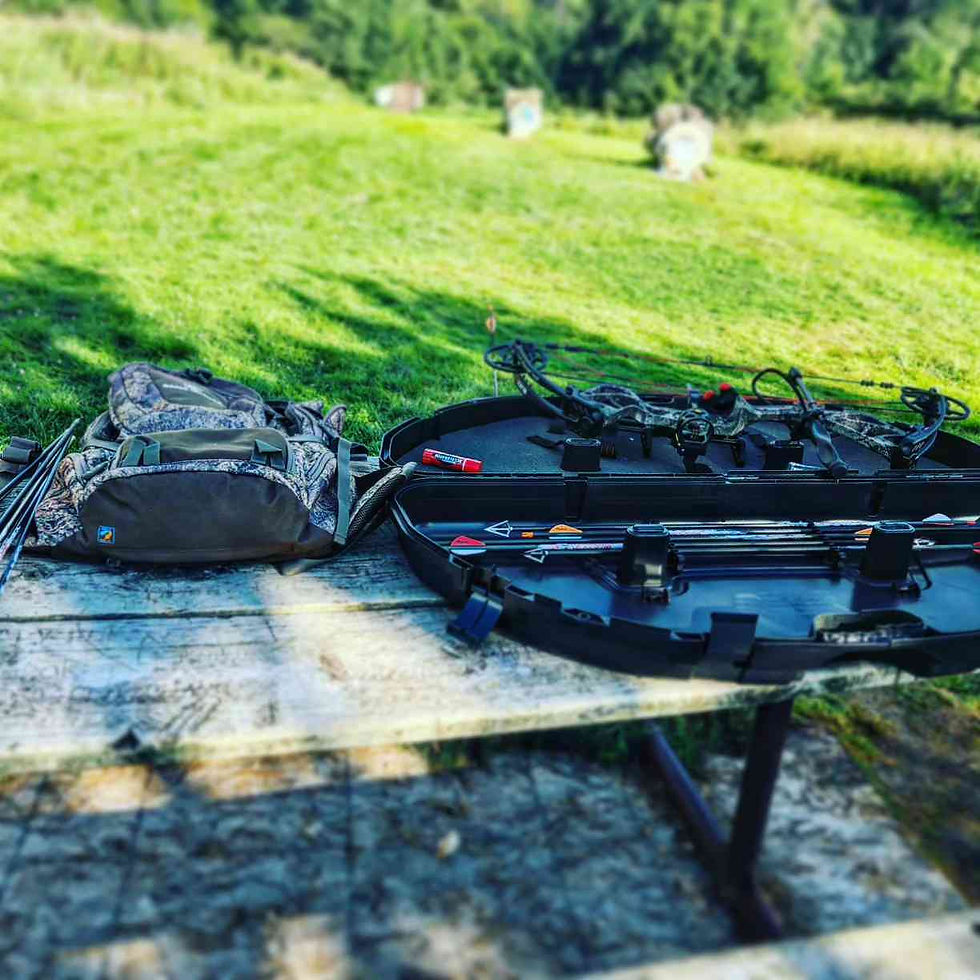
If you take away any tips from this post, it's that practice makes perfect. As with anything in life, the more you practice the better you become. Practice for me starts as soon as it thaws here in Minnesota. Getting out to the archery range once a week, then twice a week later in the summer. It’s important to practice with your bow or rifle because it builds confidence and muscle memory. Waiting until the season starts does a disservice to you out in the woods, your equipment could be faulty, or your skill could have diminished over the off season. Practicing doesn’t always mean shooting your bow or rifle, it could mean practicing putting up and taking your stands down, checking your equipment often and knowing how to use it. All of these things could cost you a shot when it matters most.
10. Let the hunt remain the hunt –
Hunting can be very challenging. It is fun and it should stay fun. It is an escape for most people and that time in the woods is for you, don’t let anyone take that away from you. Remember the reason why you’re out there. Keep it fun through the hard hunts and easy hunts. Remember that the trophy is in the eye of the beholder and do not participate in deer shaming.
Stay Safe & Happy Hunting!


Comments